Fuzzy, Bold, Iconic: Inside the Chenille Patch
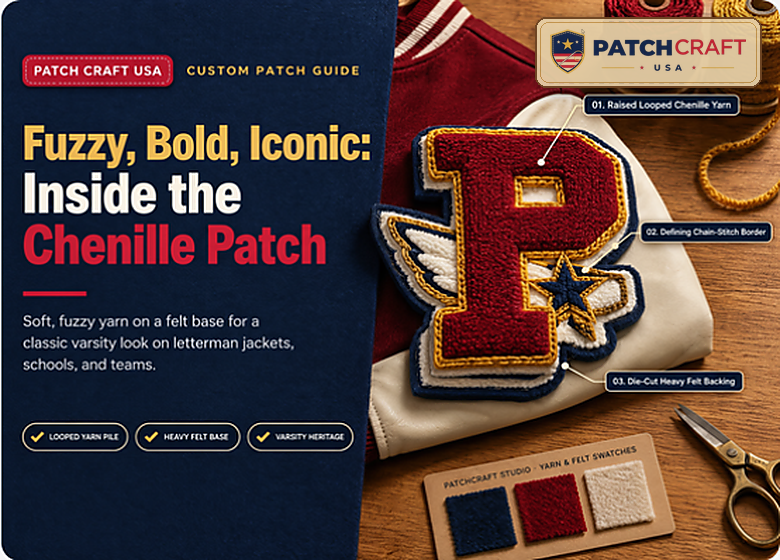
Pick up an old letterman jacket and run your thumb over the big letter on the chest. That soft, fuzzy, slightly springy texture is chenille, and it has been the look of school pride for generations. Today it shows up on streetwear hoodies, brand merch and team gear just as often as on varsity jackets.
If you’re thinking about chenille for your school, team or clothing line, this guide walks you through what it is, how it’s made, where it works best and where it doesn’t.
Short answer: A chenille patch is a patch made from looped yarn stitched onto a felt base. The loops stand up from the surface and create a soft, towel-like texture. Chenille is best for bold letters, numbers, mascots and simple logos at 3 inches or larger, and it’s the classic choice for letterman and varsity jackets.
What Is a Chenille Patch, Exactly?
The word “chenille” comes from the French word for caterpillar, and once you see the yarn up close, the name makes sense. Chenille yarn is fluffy and full, with short fibers that stand out in every direction.
A chenille patch has two main layers:
- The felt base. A sturdy felt layer gives the patch its shape and outline. It’s often a contrasting color, so the design pops.
- The chenille yarn. Yarn is stitched onto the felt in tight loops. The loops create the raised, fuzzy surface people recognize instantly.
Most chenille patches also have an embroidered outline or embroidered details, like a thin border around a letter or small text under a mascot. That mix of fuzzy yarn and flat stitching is what gives a good chenille patch its clean, finished look.
How Is a Chenille Patch Made?
Making chenille is closer to sewing art than printing. Here’s the basic process we follow at PatchCraft USA:
- Artwork review. We look at your logo or letter and check whether the design will hold up in chenille. Thin lines and tiny text usually need to be simplified or switched to embroidery.
- Free mockup. You get a digital mockup within 24 hours, so you can see colors, size and layout before anything is made.
- Felt cutting. The felt base is cut to the outline of your design.
- Chenille stitching. A chenille machine loops the yarn onto the felt, color by color.
- Embroidered details. Outlines, small text and fine details are stitched in thread.
- Backing. We add iron-on, sew-on or Velcro backing, depending on how you’ll use it.
Once you approve the mockup, production takes 10 to 12 business days, plus shipping to anywhere in the 50 states.
Chenille vs Embroidered Patches: Which One Should You Choose?
This is one of the most common questions buyers ask. Both are stitched, both look great, but they do very different jobs. Here’s a quick side-by-side:
| Feature | Chenille | Embroidered |
| Texture | Soft, fuzzy, raised loops | Flat to slightly raised thread |
| Best for | Big letters, numbers, mascots | Detailed logos, small text |
| Ideal size | 3 inches and up | 1 inch and up |
| Fine detail | Limited | Excellent |
| Classic use | Letterman and varsity jackets | Uniforms, caps, workwear |
A simple rule: if people will see the patch from across a room or a football field, chenille is a strong choice. If they need to read small words up close, go with custom embroidered patches instead.
You don’t always have to choose. Many schools combine the two, with a chenille letter on the front and an embroidered crest or name on the sleeve.
Where Chenille Patches Work Best
Chenille has a strong personality, so it shines in places where bold and nostalgic is the goal.
Letterman and varsity jackets
This is Chenille’s home turf. Chenille letters for letterman jackets are usually 4 to 8 inches tall, often with an embroidered sport pin or year added. Back patches can go up to 12 inches.
Team and school spirit wear
Booster clubs, cheer squads and band programs use chenille numbers and mascots on hoodies and blankets. If your squad wants extra shine, you can also pair chenille with sequin patches for a mixed-texture look.
Streetwear and brand merch
Clothing brands love chenille because it turns a basic heavyweight hoodie into a statement piece. One chunky logo on the chest or back is often enough.
Totes, caps and accessories
Smaller chenille patches work on totes and trucker caps, as long as the design stays simple. On hats, keep the design bold, because there’s limited space for loops.
Design Tips That Make Chenille Look Expensive
A few small choices make the difference between a patch that looks premium and one that looks crowded.
- Go big. Chenille needs room for its loops. Under 3 inches, details start to blur.
- Keep shapes bold. Thick letters, simple mascots and clean outlines work best.
- Use contrast. A dark felt base with a bright chenille color (or the reverse) makes the design stand out from a distance.
- Move small text to embroidery. Names, years and taglines read better as thread than as yarn.
- Limit colors. Chenille looks cleanest with a few strong colors rather than a full gradient. If your design has photo-level color, a sublimation patch is a better fit.
How to Attach Chenille Patches
How you attach a chenille patch depends on the garment and how often it will be washed.
Sew-on is the most secure option and the traditional choice for letterman jackets. A tailor or local alteration shop can sew it on in minutes.
Iron-on is fast and works well on cotton hoodies and totes. Use a pressing cloth so the iron doesn’t flatten the loops, press firmly from the back of the fabric when you can, and let it cool before you move it. Our step-by-step guide on how to iron on a patch covers heat, timing and fabric.
Velcro lets you move a patch between jackets or bags. It’s popular for team gear that gets shared.
For pieces that will be washed often, we usually recommend sew-on, or iron-on plus a few stitches around the edge for extra hold.
How to Care for Chenille
Chenille is tougher than it looks, but the loops can fuzz if they’re treated roughly.
- Turn the garment inside out before washing.
- Use cold water and a gentle cycle.
- Air dry or tumble dry on low.
- Never iron directly on the chenille face.
- If loops pull out, trim them carefully with small scissors instead of pulling.
Is Chenille Right for Your Project?
Chenille is a great fit if:
- Your design is bold and simple
- The patch will be 3 inches or larger
- You want a classic varsity or vintage look
- The patch will be seen from a distance
It’s not the best fit if your logo has tiny text, thin lines or lots of color shading. In those cases, embroidered, woven or sublimated patches will give you a sharper result. You can compare every option on our patch services page.
Three Real-World Examples
A high school athletic department. The school wants varsity letters for six sports. The best setup is one chenille letter in school colors, about 6 inches tall, with a small embroidered sport icon added for each team. One letter design, six small variations, and every athlete gets a jacket that matches.
A streetwear brand launching a winter drop. The brand wants something people will touch in the store. A single oversized chenille logo on the back of a heavyweight hoodie, with a small woven label at the hem, gives the piece a premium feel without crowding it.
A youth sports league. Parents want something for the end-of-season party. Chenille numbers on tote bags and blankets are simple, fun and easy to personalize for each player.
Key Takeaways
- Chenille is looped yarn stitched onto felt, giving a soft, raised, fuzzy texture.
- It works best for bold letters, numbers and mascots at 3 inches or larger.
- Combine chenille with embroidery for small text, names and fine details.
- Sew-on is the most secure backing for jackets that get washed often.
- Wash inside out in cold water and never iron the chenille face directly.
Frequently Asked Questions
What is the difference between chenille and embroidery?
Chenille uses thick, looped yarn on felt for a soft, raised texture. Embroidery uses thin thread stitched tightly for sharp detail. Chenille is best for big, bold shapes, while embroidery handles small text and fine lines.
Can you iron on a chenille patch?
Yes. Chenille patches can come with iron-on backing. Use a pressing cloth to protect the loops, apply firm pressure, and let the patch cool before handling. For jackets that get washed a lot, sew-on is more secure.
What size should a chenille letter be?
Most chenille letters for letterman jackets are 4 to 8 inches tall. Back patches can go up to 12 inches. We don’t recommend chenille under 3 inches, because the loops need room.
What is the minimum order for custom chenille patches?
At PatchCraft USA, orders start at 25 pieces. Setup is free, and you get a free mockup within 24 hours before you commit.
How long do chenille patches last?
With gentle washing and sew-on backing, chenille patches can last for many years. Many letterman jackets keep their original letters for decades.
Ready to Make Your Own?
Chenille is one of the few patch styles that people want to touch. If you’re planning letters for a team, a mascot for spirit wear or a bold logo for your next drop, we can help you get the size and colors right before production.
Send us your design and we’ll create a free mockup within 24 hours. Learn more about our custom chenille patches, or request your free quote today.
Ready to Make Your Own Custom Patches?
Free mockup, low minimums, delivery across the USA. Send us your logo and get a quote in 24 hours.