
Are PVC Patches Waterproof? What Rain Really Does
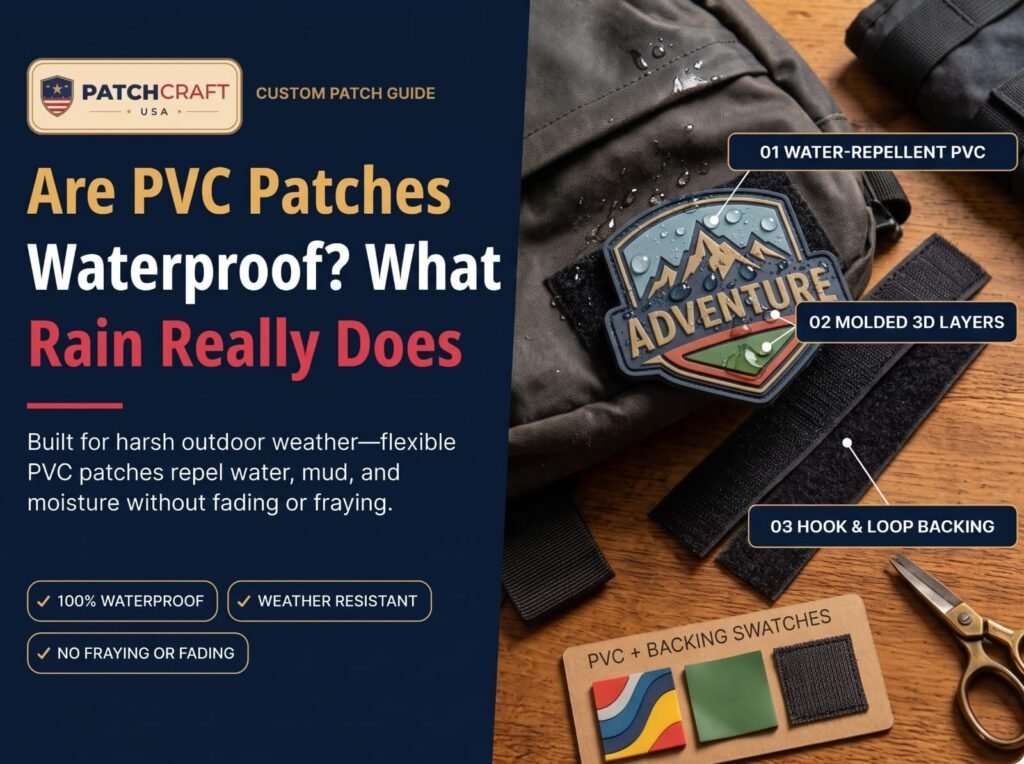
Picture a fabric patch on a backpack after a weekend of rain, mud and river crossings. The thread is soaked, the colors look dull, and the edges are starting to fuzz. Now picture a PVC patch on the same pack. You wipe it with your hand and it looks the same as the day it arrived.
That difference is why PVC patches have become the go-to choice for outdoor brands, first responders, airsoft teams and anyone whose gear takes a beating.
Short answer: Yes, PVC patches are waterproof. PVC is a soft, flexible rubber-like plastic that doesn’t absorb water, so rain, sweat and mud wipe right off. PVC patches also hold their color and shape well over time, which makes them one of the most durable patch types for outdoor, tactical and work gear.
What Is a PVC Patch?
PVC stands for polyvinyl chloride. To make a PVC patch, liquid PVC is poured into a custom mold, one color at a time, then cured until it becomes solid but flexible. Because every color sits in its own layer, the design comes out crisp, with clean lines and sharp edges.
You may also hear PVC patches called rubber patches or 3D rubber patches. They’re the same thing.
Why PVC Patches Are Waterproof
Fabric patches are made of thread, and thread absorbs water. PVC is a solid, non-porous material. Water sits on top and runs off instead of soaking in.
That gives PVC patches a few practical advantages:
- No soggy patch. It stays the same weight and shape when wet.
- Easy to clean. Mud and dirt wipe off with a damp cloth.
- No fraying. There are no threads to pull or unravel.
- No mildew in the patch itself. Since it doesn’t hold water, it dries instantly.
What About Sun, Heat and Cold?
Water is only one part of outdoor life. Here’s how PVC handles the rest:
Sun: PVC holds its color well. Like any material, very long direct sun exposure can fade colors over time, but PVC generally keeps its look longer than fabric.
Heat: PVC stays flexible in normal heat. Avoid direct high heat, such as an iron or a hot car dashboard for long periods, which can soften or warp it.
Cold: PVC stays flexible in cold weather and doesn’t crack under normal use.
How Long Do PVC Patches Last?
With normal use, PVC patches last for years. They don’t fray, the color is part of the material, and the flexible rubber resists cracking.
What usually wears out first isn’t the patch. It’s the Velcro hook backing or the garment it’s sewn onto. That’s one reason many people choose Velcro: they can move the patch to new gear when the old gear wears out.
PVC vs Embroidered Patches for Outdoor Gear
Here’s how PVC compares with embroidery when gear gets wet and dirty:
| Feature | PVC | Embroidered |
| Water | Waterproof | Absorbs water |
| Cleaning | Wipe clean | Wash with care |
| Fraying | Never frays | Edges can fray over time |
| Texture | Smooth, molded, raised | Stitched, textured |
| Detail | Sharp lines, bold color | Good detail, classic look |
| Feel | Modern, tactical | Traditional |
Embroidered patches are still a great choice for uniforms and everyday apparel. But if the patch will face rain, mud, sweat or heavy use, PVC usually wins. If you want to compare the stitched side in detail, see how embroidered patches are made.
PVC Patches With Velcro
PVC patches with Velcro (hook and loop) backing are especially popular for:
- Tactical vests and plate carriers
- Backpacks and range bags
- First responder and security uniforms
- Airsoft and paintball teams
- Hats with loop panels
Velcro lets you swap patches in seconds, switch between a name tape and a unit patch, or move your patch from an old vest to a new one.
You can also sew PVC patches on. A sewing channel (a flat border around the edge) makes stitching easier. One thing we don’t recommend is iron-on backing for PVC, because heat can damage the material. Our guide on how to iron on a patch explains which patch types are iron-friendly.
Flat vs 3D Rubber Patches
PVC patches come in two main styles:
- Flat (2D): Each color sits on a flat layer. Clean and graphic, great for logos and text.
- Raised (3D): Parts of the design are sculpted with real depth, so your logo stands out from every angle.
3D rubber patches are popular for mascots, skulls, animals and detailed emblems where depth adds impact.
Who Uses PVC Patches?
-
- Outdoor brands: Hiking, fishing, hunting and camping gear
- First responders: Fire, EMS and search-and-rescue teams
- Military-style and tactical gear: Morale patches and unit identifiers
- Airsoft and paintball teams
- Workwear brands: Patches that survive job sites
- Streetwear brands: A modern alternative to stitched logos
PVC vs Silicone Patches
PVC isn’t the only rubber option. Silicone patches are thinner, softer and more flexible, which makes them a good fit for stretchy activewear. PVC is thicker and more structured, which suits gear, bags and caps.
Read our full comparison: silicone vs PVC patches: the gym bag test, or see our silicone patches page.
Design Tips for PVC Patches
- Bold outlines help. Clear outlines separate colors and make the design pop.
- Avoid very thin lines. Lines need some width to mold cleanly.
- Mind small text. Keep lettering bold and not too small.
- Use contrast. Bright colors on dark backgrounds read best from a distance.
- Consider 3D for depth. Raised layers work well on mascots and emblems.
How to Clean PVC Patches
- Wipe with a damp cloth.
- For tougher dirt, use mild soap and warm water with a soft brush.
- Rinse and let it air dry.
- Avoid harsh solvents and high heat.
Real-World Examples
A search-and-rescue team. The team wants patches for packs and jackets that will see rain, mud and river crossings. PVC with Velcro backing lets members move patches between gear, and the patches wipe clean after every mission.
A fishing apparel brand. The brand puts PVC patches on its caps. Saltwater, sun and sweat don’t faze the patch, and customers notice that it still looks new after a full season.
An airsoft team. The team designs a 3D rubber patch of its mascot. The raised layers give it depth, and the Velcro backing fits the loop panels on their vests.
Mistakes to Avoid With PVC Patches
- Very thin lines. Lines that are too thin can break up in the mold. Thicken them slightly in your design.
- Tiny text. Keep lettering bold and reasonably sized.
- Using iron-on. Heat can damage PVC. Choose Velcro or sew-on.
- Too many colors in small spaces. Each color needs its own area in the mold. Simplify busy sections.
Is PVC Safe for Everyday Wear?
PVC patches are a common choice for apparel and accessories. They sit on the outside of the garment, so they don’t rest directly against the skin in most uses. If you’re making products for very young children, tell us during your quote so we can talk through the best material and attachment for your audience.
Key Takeaways
- PVC patches are waterproof because PVC doesn’t absorb water.
- They don’t fray and hold their color and shape for years.
- Velcro backing lets you move patches between vests, bags and hats.
- Choose flat 2D for clean logos and 3D for depth.
- Never iron PVC; use Velcro or sew-on instead.
Frequently Asked Questions
Are PVC patches waterproof?
Yes. PVC doesn’t absorb water, so PVC patches stay dry, clean and the same shape after rain, sweat or mud.
Can PVC patches be washed in a washing machine?
Yes, on a gentle cycle in cold water. If the patch has Velcro backing, remove it first. Air dry instead of using high heat.
Can you iron on a PVC patch?
No. Heat can warp or damage PVC. Use Velcro or sew-on backing instead.
What is the minimum order for custom PVC patches?
At PatchCraft USA, orders start at 25 pieces, with free setup and a free mockup within 24 hours. Production takes 10 to 12 business days after approval.
Do PVC patches crack in cold weather?
PVC stays flexible in normal cold weather and doesn’t crack under typical use.
Build a Patch That Can Handle the Weather
If your patch is going outside, on gear or into tough conditions, PVC is hard to beat. It’s waterproof, easy to clean and keeps its color and shape for years.
See all options for our custom PVC patches, add matching PVC keychains, or request your free quote and get a mockup within 24 hours.
Ready to Make Your Own Custom Patches?
Free mockup, low minimums, delivery across the USA. Send us your logo and get a quote in 24 hours.